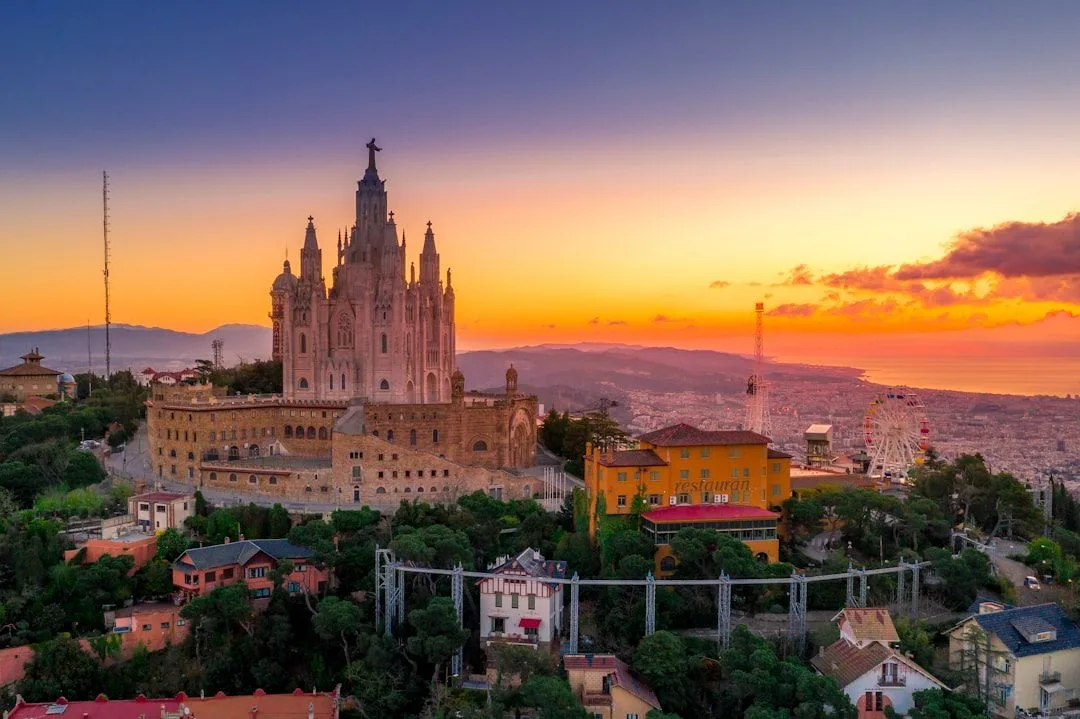
Spain's Mediterranean is warm, flat and busy. Its Atlantic north is where the water sports actually are, and almost no visitors go there.
Surfing the north
The Basque and Cantabrian coasts, where Atlantic swell produces consistent waves.
Mundaka — one of Europe's best left-hand river-mouth waves, and firmly for experienced surfers. It works on specific conditions and the local lineup is serious.
Zarautz, Somo and Rodiles suit a broader range, with schools.
Autumn brings the most reliable swell, with warm water still and summer crowds gone. This is the season.
Further west, Galicia's Costa da Morte is powerful, cold and empty.
Kayaking the Costa Brava
The coastline between the coves is indented with cliffs, sea caves and small beaches reachable only from the water.
Guided trips launch from several towns, and the Camí de Ronda coastal footpath runs above the same stretch, which makes a walking-and-paddling trip work well.
The Medes Islands, off L'Estartit, are a protected marine reserve and the best Mediterranean diving on the Spanish mainland.
Diving
The Canary Islands — volcanic underwater terrain, arches, lava tubes and drop-offs, with warm water year round. El Hierro and La Palma in particular, and El Hierro's Mar de las Calmas is a marine reserve.
The Medes Islands on the Costa Brava.
Cabo de Gata in Almería — a volcanic natural park with clear water and, unusually for the Spanish Mediterranean, almost no development.
Canyoning
The Sierra de Guara in Aragón has more canyons than anywhere else in Europe.
Descending narrow limestone gorges by abseiling, jumping and swimming, with routes ranging from gentle walks through water to committing full-day descents.
Alquézar is the base, with guides widely available. Wetsuits are provided and are necessary — the water is cold even in August.
Season is roughly June to September, when water levels are safe.
Whitewater
The Noguera Pallaresa in Catalonia — the main rafting river, best in spring snowmelt.
The Gállego in Aragón.
The Sella in Asturias, with an annual descent that is a major event.
Flat water and coast
Windsurfing and kitesurfing at Tarifa, where the Atlantic meets the Mediterranean and the Levante wind is relentless. Among the best conditions in Europe, and consistently windy enough that beginners should take lessons.
The Rías Baixas in Galicia for sheltered paddling among the drowned river valleys.
Mallorca's north coast for sea kayaking beneath the Tramuntana.
Coasteering
Scrambling, swimming and jumping along a rocky coastline, which the Basque and Asturian coasts suit well and which operators run from several towns.
Practical
The north is cooler and wetter than most people expect from Spain — this is why it is green.
Wetsuits year round on the Atlantic coast.
Season: autumn for surf, summer for canyoning, year round for the Canaries.
A car is necessary for most of the north coast, where public transport reaches the towns and not the beaches.