Thailand has genuinely world-class climbing and diving. It also has the activity that actually injures visitors in large numbers, which is renting a scooter.
The scooter problem, first
Scooter accidents are the most common cause of serious injury to visitors in Thailand.
You legally need the correct motorcycle category on an international driving permit, and almost all travel insurance voids cover for an accident without it. That means a hospital bill or an air ambulance paid personally.
Never leave your passport as a deposit. It is a common request and a common lever in disputed damage claims, where the passport is held until an inflated repair bill is paid.
Offer cash or a photocopy. Photograph the vehicle thoroughly from all angles before riding away.
Wear a helmet, and understand that road conditions on the islands are worse than they look.
Climbing
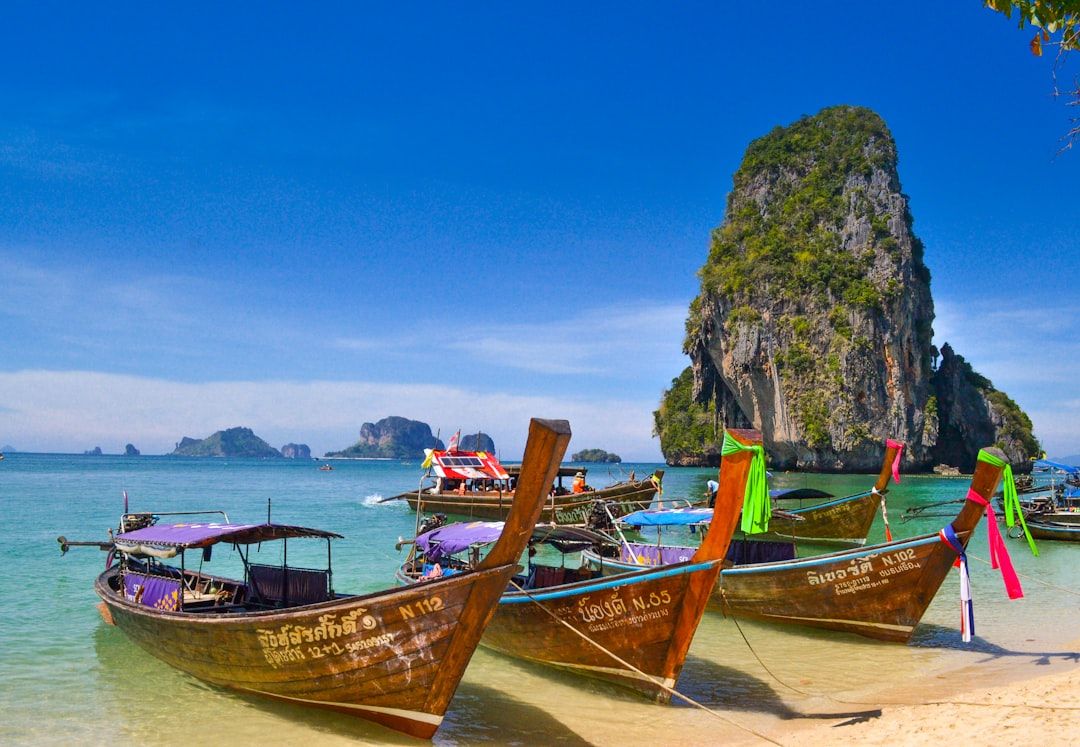
Railay and Ton Sai, near Krabi — one of the world's best-known limestone sport climbing areas, with hundreds of bolted routes on cliffs rising directly from the beach. Accessible only by longtail boat.
Schools run courses for complete beginners. The humidity and polished rock make grades feel harder than the same number elsewhere.
Deep water soloing — climbing unroped above the sea and falling into it — runs from Ton Sai on boat trips.
Chiang Mai's Crazy Horse Buttress in the north, cooler and quieter.
Best season is roughly November to April; the monsoon makes limestone wet and greasy.
Diving
Koh Tao — among the cheapest and highest-volume places in the world to certify, with warm shallow water and a very large number of schools.
Quality varies with that volume. Choose on instructor-to-student ratio and equipment condition rather than price.
The Similan Islands, off the Andaman coast — the best diving in Thailand, usually by liveaboard, with a season roughly October to May when the park is open.
Richelieu Rock for whale sharks, seasonally.
Koh Lanta and Hin Daeng for deeper, more advanced sites.
Do not fly for 18–24 hours after diving — build it into the itinerary.
Jungle and water
Khao Sok — rainforest older than the Amazon, with a lake of limestone karsts, floating bungalows, and night safaris.
Khao Yai, closer to Bangkok, with waterfalls, hiking and wild elephants.
Trekking in the north around Chiang Mai and Chiang Rai — the multi-day village treks vary enormously in how they treat the communities involved. Ask who owns the operation and where the money goes.
Kayaking in Phang Nga Bay through sea caves into hidden lagoons (hongs), best at the right tide and best avoiding the busiest hours.
Elephants, said plainly
No riding. The training required is severe and this is settled.
No performances.
Be sceptical of bathing, which has become a marketing term rather than an ethical standard — it still requires the animals to accept close human contact on demand, dozens of times a day.
Genuine sanctuaries keep visitors at a distance, state their rescue history, cap numbers, and cost more because they are not extracting labour.
Practical
The two coasts have opposite rainy seasons — the Andaman side is wettest May to October, the Gulf side around October to December.
Book locally, the day before, for roughly half the online price.
Check insurance covers diving depth, climbing and motorcycling before you need it.